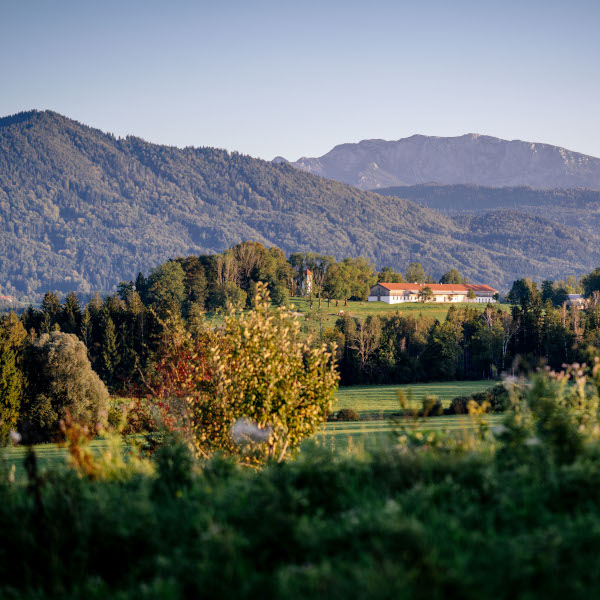
The German Living Lab (DE-LL) is situated in Nantesbuch, a municipality within Bad Heilbrunn, Bavaria, Germany, approximately 50 km south of Munich in the pre-alpine foothills between the rivers Loisach and Isar. It lies at the centre of the “Tölzer Moorachse,” a peatland-dominated hilly corridor stretching roughly 30 km between Lake Kochelsee and the town of Wolfratshausen — one of the most peat-rich regions in Central Europe.
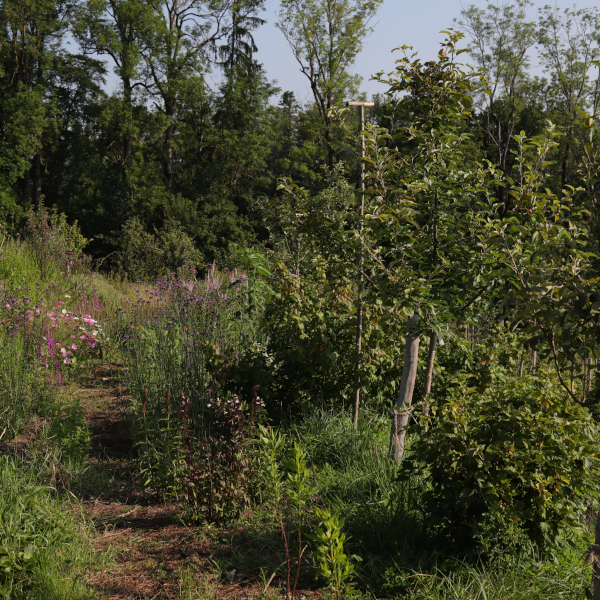
The Stiftung Kunst und Natur foundation area spans approximately 320 hectares and consists of a mosaic of extensive grassland, meadows, forests, and wetlands, including two grazed orchards and a 1-hectare permaculture garden. The pilot msAFS will be implemented on a 0.9-hectare plot on a molasse hill with mineral soil. The site is managed as a multifunctional cultural landscape combining sustainable land management, nature conservation, education, cultural activities, and research.
Key challenges include soil compaction, high variability in precipitation and soil moisture, peatland degradation from historic drainage, and frequent extreme weather events such as storms, hail, and frost. Main opportunities include fertile loamy soils with good drainage and water retention, a precipitation-rich setting, and a temperate alpine foothill climate favourable for diverse land-use strategies.
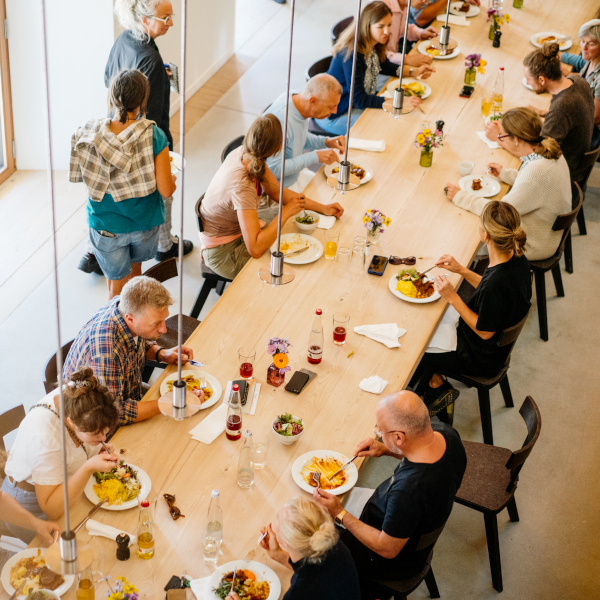
Regional practitioners and disseminators: foundations farmers, land managers and gardeners; regional gastronomy, chefs and food producers (e.g. foundations event kitchen); practitioner networks (e.g., Bioland; DeFAF)
Research and higher‑education partners collaborate on fieldwork, sampling and knowledge exchange, with project outcomes feeding directly into co‑designed outreach and training material
The Nantesbuch Soil Initiative provides a transdisciplinary expert and stakeholder network that promotes soil literacy in society; Root2Fork is closely linked to this network for co‑creation, dissemination and multiplier outreach
Civil society and cultural audiences are reached via the foundation’s “Edible Landscapes” series and related cultural formats (festivals, music events, exhibitions), which translate science into aesthetic, sensory experiences and accessible knowledge.
Start‑ups via TUM Venture Labs (innovation hub, decision tools, biochar/biostimulants)
Educational institutions and volunteers engage through student courses, site visits, FÖJ placements. They participate in hands‑on sessions that make soil health, sustainable food production and multistrata agroforestry tangible, contribute to research support, citizen‑science activities and outreach on soil, food and health linkages.
Co-design of new msAFS elements on your foundation site in Nantesbuch with practitioners (gardeners) and researchers (TUM and partners).
Co-develop and test participatory measurement and assessment formats: simple indicators (soil, plant vitality, biodiversity), social indicators (participation, well-being), surveys in the field and at events; feedback of the results into practice
Co-design of outreach tools and formats: edible landscapes, workshops, citizen science, train-the-trainer-formats as well as connection to the Nantesbuch soil initiative as a space for resonance and multiplication.
Implementation of new msAFS on former grassland / potato acre: selection of edible perennials, arrangement in fruit systems, practical maintenance and harvesting processes, integration of circular solutions (e.g. algae biostimulants).
Consolidation and monitoring of msAFS, integration of circular economy solutions
Evaluation: assess ecosystem services, social dimension and economic viability